
Cinema Lenses Matter: Why Your Glass Might Be More Important Than Your Camera
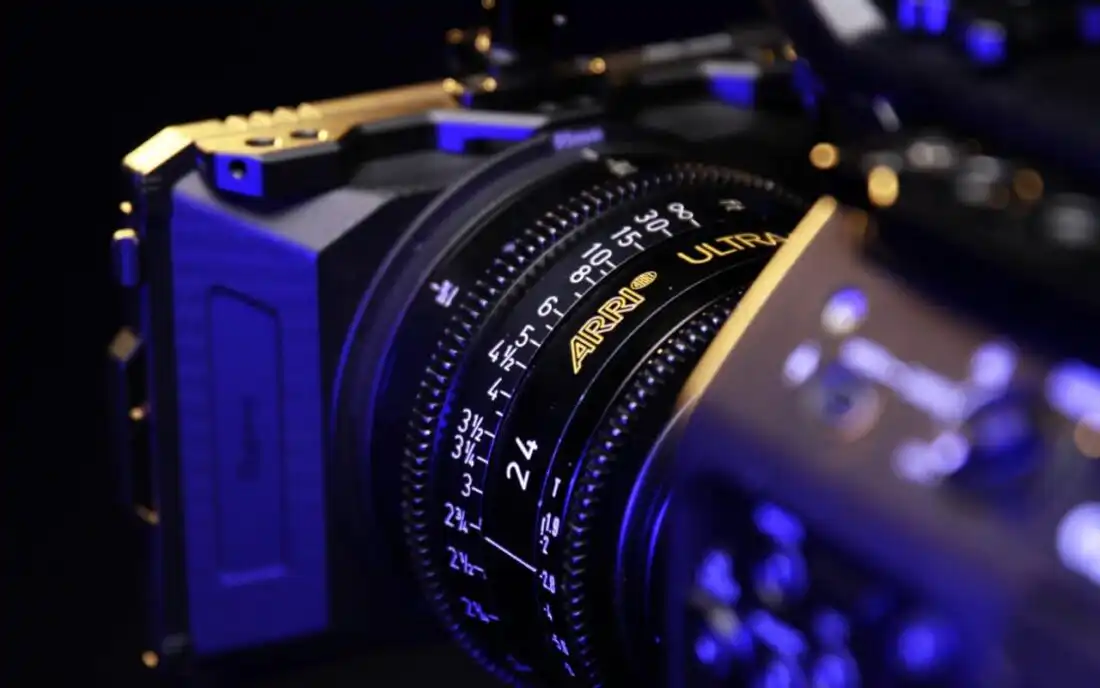
A lot of filmmakers spend a lot of time talking about cameras: Sony vs. Canon, RED vs. ARRI, 6K vs. 8K, full frame vs. Super 35. And yes, the camera matters. But when it comes to cinema lenses, here’s something you’ll hear from a lot of experienced cinematographers: the lens matters more than the camera.
In fact, say I had to choose between a mediocre lens on a great camera and great glass on a slightly less impressive camera. I’ll take the good glass almost every time. The camera captures the image. The lens creates the image.
Everything the camera records has to pass through the lens first. So before the camera does anything, the lens has already shaped what that image looks like.
Not All “Sharp” Is Good
Modern cinema cameras are ridiculously good. Even relatively affordable cameras can produce incredibly detailed, high-resolution images with excellent dynamic range and low-light performance. Dynamic range is how much detail a camera can hold from the darkest shadows to the brightest highlights in the same shot.
That means the lens is now doing even more of the creative heavy lifting. When even affordable cameras deliver that kind of detail, sharpness alone doesn’t set your footage apart. The look comes from the glass.
How Cinema Lenses Change the Look
Different lenses can dramatically change contrast, sharpness and skin tones. Contrast is the difference between the light and dark parts of the image, and it makes footage feel punchy or soft. Sharpness is how much fine detail the lens resolves. Skin tones come down to how faces look on screen, from their color to how much texture shows.
Lenses also change flare, bokeh and distortion. Flare is how a lens reacts when a bright light hits it, from a subtle haze to bold streaks. Bokeh is the look of the out-of-focus areas in a shot. Distortion is how much straight lines bend, which you tend to notice toward the edges of the frame.
Then there’s color rendition, depth and dimensionality, and focus breathing. Color rendition is the color character a lens gives the image. Depth and dimensionality describe how three-dimensional a shot feels. Focus breathing is when the framing shifts slightly as you change focus.
Finally, lenses change how highlights roll off. That’s how the brightest parts of the frame transition into the rest of the image, whether gently or harshly.
Same Scene, Different Productions
Two cameras can record essentially the same scene. But put two completely different lenses on them, and the footage can look like it came from completely different productions. All of those qualities add up on screen.
That’s why cinematographers tend to have strong opinions about cinema lenses. Very strong opinions. Ask five DPs, or directors of photography, what their favorite lens set is and you’ll probably get seven answers.
Good Glass Is an Investment
There’s a reason professional productions can spend tens of thousands, or significantly more, on lenses. Good cinema lenses are built to last. They come with precise focus mechanisms, consistent gearing, controlled breathing, matched color and rendering between focal lengths, and carefully engineered optical characteristics.
Each of those details shows up on set. Precise focus mechanisms and consistent gearing help make focus pulls accurate, whether you pull by hand or with a lens motor. Controlled breathing keeps the frame steady during focus changes. And matched color and rendering let you switch focal lengths within a set without the look jumping around from shot to shot.
Why a Great Lens Outlasts a Camera
And unlike cameras, which seem to become obsolete every time a manufacturer announces a new model, a great lens can stay useful for decades. A new camera might bring more resolution or new features. But the way a great lens renders an image doesn’t go out of date when that happens.
That’s one reason you’ll see older Cooke, ARRI, Angénieux and other professional cinema lenses still being used on very modern cameras. The camera might change. The glass doesn’t necessarily need to.
Prime vs. Zoom Cinema Lenses: Which Is Better?
Ah, the classic argument. The answer depends on the kind of production you’re shooting, so it helps to understand what prime and zoom cinema lenses each do.
Prime Lenses
A prime lens has a fixed focal length, for example 35mm, 50mm or 85mm. You can’t zoom, and that’s actually part of the appeal. Focal length sets how wide or tight your view is, so with a prime, that view stays fixed.
Prime lenses are often smaller, faster and optically optimized for a specific focal length. They can also encourage you to physically move the camera and think more carefully about composition. When you want a tighter shot, you move closer or change lenses, so every camera position becomes a deliberate choice.
For narrative work, commercials and controlled productions, a set of primes can give you a very deliberate visual language. When a shoot leaves time to set up each shot, that’s where primes shine.
Zoom Lenses
Zooms give you multiple focal lengths in one lens. That makes them incredibly useful when you don’t have the time, or the space, to constantly change lenses.
They’re especially valuable for documentary, reality and live events, where the action doesn’t wait for a lens change. They’re a big help on commercials too. And they’re a natural fit for run-and-gun production, which means shooting quickly and on the move with minimal setup.
Zooms also earn their place in gimbal or handheld work, and in situations where you can’t easily move the camera. When the camera can’t move, zooming is how you change the framing.
A good cinema zoom can be an absolute lifesaver. And modern cinema zooms can be really good.
So Which Should You Use?
It depends on the production. If I’m shooting a narrative scene with time to light, rehearse and compose every shot, I’m probably reaching for primes.
If I’m shooting a documentary and something unexpected happens across the room? Give me the zoom. Unless I’m shooting a locked-off interview, and in that case, I want a prime.
A locked-off shot means the camera is set in place and doesn’t move. In an interview like that, the frame isn’t going anywhere. So you can choose your focal length once and let the prime do the work.
If a bride walks down the aisle and I have one chance to get the shot? I’m not changing lenses because I decided the 85mm would look better. I’m zooming.
The best lens isn’t necessarily the most expensive one. It’s the one that makes sense for the job.
Why We Carry Both
At Agape Media Group, we keep both prime and zoom cinema lenses in our rental lineup because productions have different needs. A shoot with time to compose every frame and a shoot chasing unexpected moments call for different glass.
Our Tokina Vista Primes are some of my favorite affordable cinema primes. And our Angénieux EZ zooms are incredibly versatile when you need speed and flexibility.
Neither is “better.” They’re different tools, and that’s really the point.
Before you spend thousands of dollars upgrading your camera, spend some time thinking about what you’re putting in front of it. Because sometimes the biggest upgrade isn’t a new camera. It’s better glass.
Let’s Make Something
We use the lenses and cameras we rent on real productions, so we can help you choose what your shoot actually needs, and just as importantly, what it doesn’t. Our camera and lens rentals are available individually or packaged around your shoot, and we can add experienced DPs, camera operators and ACs when you need people as well as glass. For a team that takes the project from planning through post, our video production services cover that too.
From developing the look before you shoot to the final frame, our production services are built around your project, and our work spans documentaries, commercials and branded content. Agape Media Group is a small, owner-led production company based in South Florida, so you work directly with the people responsible for your project. Tell us what you’re shooting, request a quote or call 954-249-0702, and we’ll help you put the right lens package together.