
Canon vs Sony for Video: Which Cinema Camera Is Better?
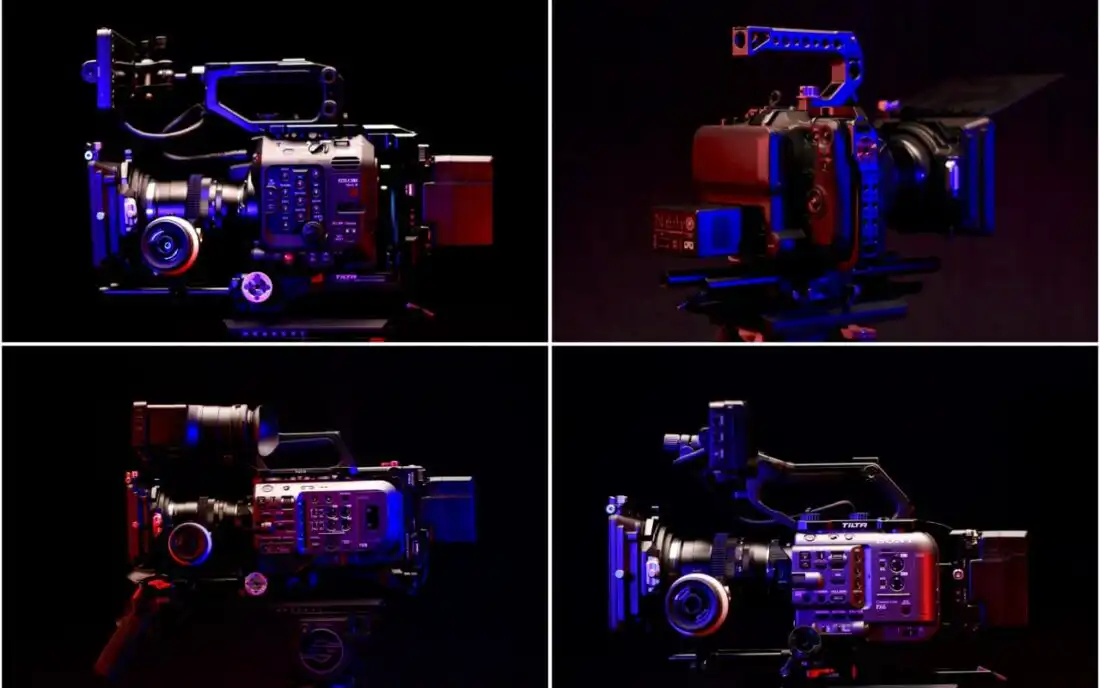
Canon vs Sony for video. It’s a debate that has probably started more arguments in camera forums than almost anything other than “Should you shoot LOG?”
Both sides have their people. Sony people swear Sony is better. Canon people swear Canon is better. And then someone shows up with an ARRI and tells everyone they’re doing it wrong.
The truth? Both Canon and Sony make ridiculously good cameras. The differences are real, but they’re not as simple as “one makes better pictures.” In Canon vs Sony for video, those differences show up in practical features, color, menus and how each camera feels to operate.
Sony: Sharp, Fast and Incredibly Practical
Sony has dominated a huge portion of the professional video market for years, particularly in documentary, corporate, broadcast and run-and-gun production. And there’s a reason: Sony cameras tend to be incredibly practical.
The Sony FX6 Is a Perfect Example
The FX6 is a perfect example. It’s a full-frame cinema camera with 4K recording, 10-bit 4:2:2 internal recording, 15+ stops of latitude, excellent autofocus, high frame rates and a built-in electronic variable ND. That combination is hard to beat when you’re working quickly.
Internal recording means that 10-bit 4:2:2 footage goes straight to the camera’s own media, with no separate recorder attached. The 10-bit and 4:2:2 parts describe how much tone and color information the file holds, which gives you more room when you color grade.
The built-in variable ND lets you control exposure in bright light without stopping to swap filters. Put all of that together, and you spend less time adjusting the camera and more time shooting.
The FX6 also has dual base ISO at 800 and 12,800, which makes it particularly useful when you’re working in less-than-ideal lighting conditions. Dual base ISO means the sensor has two native sensitivity settings, one for normal light and a higher one for dark scenes. When the light drops, you can switch to the higher base instead of pushing the lower one too far.
And Sony’s autofocus has become genuinely impressive. That’s a big deal when you’re filming documentary subjects, interviews, events or situations where you don’t get a second take. If focus misses in those moments, the shot is gone.
And Yes, Sony Menus Have Gotten Better
But I’m still going to say it: Sony menus have historically been unnecessarily complicated. If you’ve spent time bouncing between Sony and Canon cameras, you know exactly what I mean.
Sony has improved dramatically with its newer Cinema Line cameras. Still, Canon’s menu system and general camera ergonomics are something I personally find easier to navigate, especially when you’re under pressure. Ergonomics is how a camera feels to operate, from where the buttons sit to how quickly you can reach the setting you need.
And that’s an underrated part of camera selection. A camera can have the best specifications in the world. But picture a client standing behind you asking, “Are we ready?” If you can’t find the setting you need, those specifications suddenly become less impressive.
Canon: Color, Ergonomics and a Beautiful Image
Canon has always had a very loyal following among cinematographers, and color is a huge part of that. Canon’s color science has a reputation for producing pleasing skin tones and a very natural-looking image.
Color science is the way a camera turns what the sensor captures into the colors you see. Each manufacturer makes its own choices there, which is why two cameras can render the same scene a little differently.
Color Science Isn’t Magic
Of course, color science isn’t magic. You can make either system look fantastic with good exposure, lighting and color grading.
But there is absolutely a difference in how manufacturers approach their images, and some people simply prefer the Canon look. I’m one of those people.
The Canon C500 Mark II
The Canon C500 Mark II is one of my favorite cameras to shoot on. It has a 5.9K full-frame sensor, Canon Log 2 with 15+ stops of dynamic range, internal Cinema RAW Light and a modular design with interchangeable lens mounts.
Canon Log 2 is a flat, low-contrast recording profile that preserves detail in the shadows and highlights so you can shape the look later. Cinema RAW Light is Canon’s lighter RAW format, recorded right inside the camera.
The modular design means you can build the camera up or strip it down depending on the job. Interchangeable lens mounts let you swap the mount itself to fit the lenses you want to use.
It is a seriously capable camera. And when I’m in a situation where I need to grab a camera and just get the shot, I’m extremely comfortable with the C500 Mark II.
Sony FX6 vs Canon C500 Mark II
In the Canon vs Sony for video debate, this is probably the comparison I’m asked about most. And there’s no simple winner, because each camera brings a different set of strengths.
What the Sony FX6 Brings
The FX6’s strengths start with speed and mobility. You also get excellent autofocus, low-light performance, a built-in electronic variable ND and high frame rates. All of that comes in a lightweight configuration with real run-and-gun documentary capability. The FX6 is a ridiculously good “throw it in your bag and go” type of camera.
What the Canon C500 Mark II Brings
The C500 Mark II’s strengths start with Canon’s image and color characteristics. You get 5.9K capture, internal Cinema RAW Light and full-frame imaging. It also offers a modular configuration, flexible lens-mount options and a more traditional cinema-camera operating experience.
Canon also gives you some serious flexibility in post because of its RAW recording options. RAW holds on to much more of what the sensor captured, so decisions like white balance and exposure stay adjustable when you reach the grade.
What About the Sony FX9?
The FX9 still has a very strong place in professional production. Sony describes it as having a full-frame 6K sensor that oversamples to 4K, with Super 35 support and Dual Base ISO. It also offers a shoulder-style configuration and expanded connectivity options with the XDCA-FX9 extension unit.
Oversampling means the camera captures more detail than the final 4K file needs and then scales it down. That tends to produce a cleaner image. Super 35 support lets you record from a smaller area of the sensor, which suits lenses designed to cover that area.
It’s a different animal from the FX6. The FX6 is smaller and more nimble, while the FX9 is more of a traditional production and broadcast workhorse. Neither one is “better.” They’re built around different priorities.
And Then There’s the High-End Sony VENICE
If you move up the Sony lineup, you eventually get to the VENICE family. And this is where the “Sony makes mid-range cameras” argument falls apart pretty quickly.
The VENICE and VENICE 2 are serious high-end cinema systems designed for major productions. They’re absolutely capable of competing in the same conversation as cameras from ARRI, RED and other high-end manufacturers.
Why Most Productions Don’t Need One
But here’s the thing: most productions don’t need one. That’s not an insult. It’s actually a good thing.
A relatively compact camera like the FX6 can produce a professional 4K image with 10-bit 4:2:2 recording and 15+ stops of latitude. That’s pretty incredible when you consider where the industry was 10 to 15 years ago.
Canon vs Sony for Video: Which One Should You Choose?
My answer is annoyingly simple: whichever one you like using. I know cinematographers who will choose Canon every time. Others will take a Sony without thinking twice.
Some people love the Sony workflow, and others hate it. Workflow is how your footage moves from the camera to the finished edit. Some love Canon’s color, and others don’t care.
Some people want autofocus. Others wouldn’t let autofocus anywhere near their narrative set. On a narrative set, focus is often a deliberate creative choice, so some filmmakers want a person controlling it rather than the camera. That’s filmmaking.
Two of Our Favorite Mid-Range Cameras
For us personally, two of our favorite mid-range cameras to work with are the Canon C500 Mark II and Sony FX6. If I had to grab one in a panic and run out the door? I’m probably grabbing the Canon.
But if you told me I had to shoot a documentary in the Everglades tomorrow? I’d be very happy putting an FX6 in the bag.
And that’s really the point. Don’t choose your camera based on which logo has the most fans online. Choose the camera that makes sense for your production.
Let’s Make Something
We use the cameras we rent on real productions, so we can help you figure out what your shoot actually needs, and just as importantly, what it doesn’t. Our camera and equipment rentals are available individually or packaged around your shoot, and we can add experienced camera operators, DPs and ACs when you need people as well as gear. If you want a team to take the project from planning through post, our video production services cover that too.
From shaping the story before you shoot to the final cut, our production services are built around your project, and our work spans documentaries, commercials and branded content. Agape Media Group is a small, owner-led production company based in South Florida, so you work directly with the people responsible for your project. Tell us what you’re shooting, request a quote or call 954-249-0702, and we’ll help you build the right package.