
Best Cameras for Documentary Filmmaking: What Actually Matters
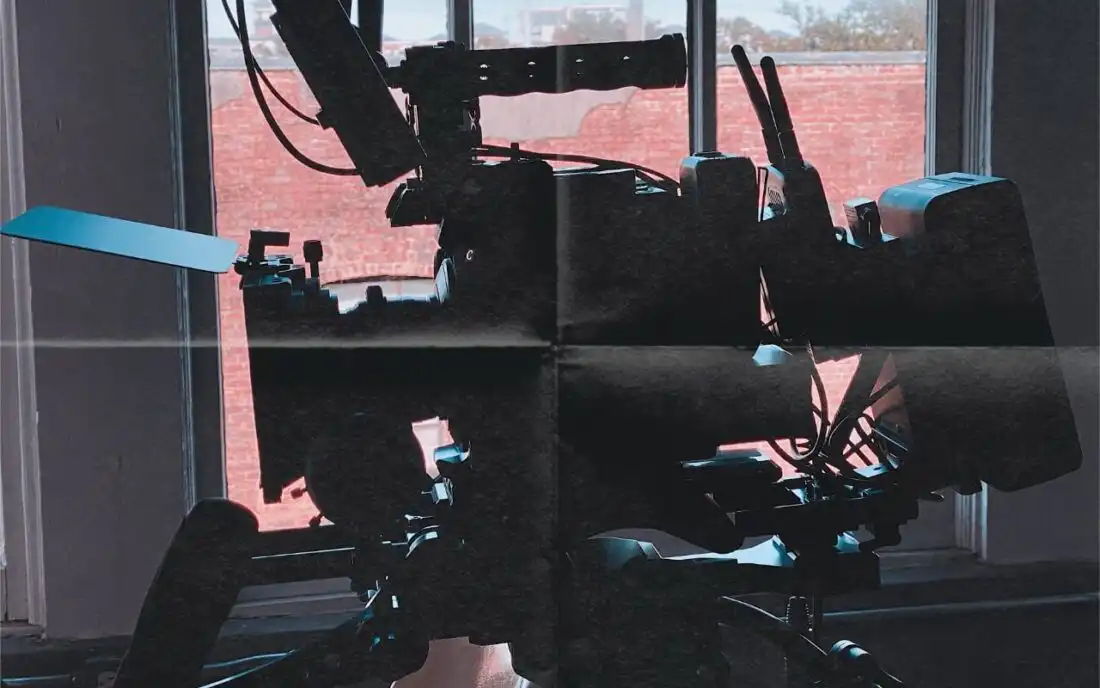
Documentary filmmaking is one of those types of production where the camera needs to be ready for basically anything. That’s why the best cameras for documentary filmmaking aren’t simply the ones with the highest resolution.
Picture the kind of day a documentary can throw at you. You might be inside a dark room at 8 AM, then outside in direct sunlight at noon. Later, you could be sitting in a moving vehicle, walking through a crowded street or filming an interview.
Then suddenly someone says something incredible, and you have three seconds to get the shot. Each of those situations asks something different of the camera.
What Makes a Good Camera for Documentary Filmmaking?
It’s not just resolution. When you compare cameras for documentary filmmaking, the features that matter most are the ones you feel on a real shoot. That means low-light performance, built-in ND, size and file sizes.
Low-Light Performance
This is huge. Documentaries don’t always happen under perfect lighting, and you don’t necessarily get to put a 12×12 diffusion frame outside someone’s house. A diffusion frame is a large panel of fabric that softens harsh light.
On a documentary, sometimes you have whatever light exists. Sometimes you need to shoot at night, in the dark, and lighting is not an option.
That’s why good high-ISO performance is extremely valuable in cameras for documentary filmmaking. Raising ISO brightens the image in dark places, but many cameras get noisy when you push it. Good high-ISO performance means the image stays clean when the light runs out.
Sony’s FX6 is particularly strong here, with dual-base sensitivity and a 15+ stop latitude rating in S-Log3. Dual-base sensitivity means the sensor has two native ISO settings, including a higher one built for dark conditions. Latitude describes how much range the camera can hold between the darkest shadows and the brightest highlights. S-Log3 is Sony’s LOG recording mode, designed to protect that range for grading later.
Built-In ND
This is one of my favorite camera features, for any kind of filmmaking. ND stands for neutral density, and an ND filter works like sunglasses for your camera. It cuts down the light reaching the sensor without changing the color of the image.
Built-in electronic ND is incredibly convenient, because the filter lives inside the camera instead of on the front of the lens. You can control brightness while keeping the rest of your settings where you want them.
The FX6 and FX9 have a built-in electronic variable ND, which puts them a step ahead of the Canon systems, in my opinion. Variable means you can adjust the strength of the ND smoothly instead of jumping between set levels. All the major Canon Cinema cameras also have internal ND systems, but not variable ones.
That’s one reason dedicated cinema cameras are so much more pleasant for documentary work than many mirrorless cameras. When you walk from a dark room into direct sunlight mid-moment, a built-in ND beats stopping to swap filters.
Size Matters
A documentary camera needs to be portable. That doesn’t necessarily mean tiny, but it needs to be manageable. It also needs a good form factor that works for the operator, and all operators are different.
Form factor is the shape of the camera and how it sits in your hands or on your shoulder. What feels natural to one operator can feel awkward to another.
A camera operator carrying a 50-pound rig through a Haitian market is going to have different priorities than a cinematographer shooting a controlled commercial. On the commercial, the environment is managed. In the market, the operator has to move through the crowd and keep up with whatever happens.
This is one reason the FX6 is such a compelling documentary camera. Its compact body keeps the rig manageable.
File Sizes Matter Too
This is something camera marketing doesn’t talk about enough. Yes, 8K RAW is amazing, but if you’re shooting 40 hours of documentary footage, you will eventually hate yourself.
RAW recording keeps a huge amount of image information from the sensor, which is great for flexibility in post-production. The trade-off is file size.
Storage costs money, now more than ever. Backup costs money, because every hour of footage needs another copy somewhere safe. Transfer time costs money too, since someone has to offload those cards onto drives. And post-production costs money, because heavier files take longer to move and work with in the edit.
For documentaries, efficient codecs can be extremely valuable. A codec is the method a camera uses to compress and store the footage. An efficient one keeps image quality high without producing huge files. You want enough image quality to protect the project without generating absurd amounts of data unnecessarily.
Our Cameras for Documentary Filmmaking
We carry several cameras that are excellent for documentary work. Each one suits a slightly different style of documentary shoot.
Sony FX6
The FX6 is probably the easiest recommendation for run-and-gun documentary work. Run-and-gun means shooting on the move, often handheld, with little or no time to set up.
It’s full frame, with excellent low-light performance and a built-in variable ND. It shoots 4K 120p, which gives you the option of smooth slow motion. It also has strong autofocus, which helps when a subject moves unexpectedly, and it all comes in a compact body.
Sony FX9
The FX9 is a better choice when you want a more traditional production camera. The 6K sensor oversamples to 4K, capturing more detail than it needs and scaling it down for a cleaner 4K picture.
It supports S35 operation in addition to full frame, meaning it can record from the smaller Super 35 area of the sensor. It also has dual base ISO.
The FX9 is especially attractive for longer-form productions where shoulder-style operation and expandability matter. A shoulder-mounted camera is easier to hold through long takes. Expandability means you can add the accessories a bigger production needs.
Canon C500 Mark II
The C500 Mark II is one of my favorites. It’s full frame and records 5.9K, with Canon’s color science and excellent image quality. Color science is how a camera interprets and renders color.
It also offers Cinema RAW Light, when the project calls for it. Cinema RAW Light is Canon’s lighter RAW format, so you get RAW flexibility with more manageable files than full RAW. That ties right back to file sizes, since you can save it for the projects that truly need it.
And it can be built into a very flexible production camera. You can keep it lean or build it up as the job requires.
Canon C80
The C80 is a newer compact option with a 6K full-frame sensor, 4K/120p, Cinema RAW Light, excellent autofocus and 12G-SDI. 12G-SDI is a professional video connection that sends a high-resolution signal over a single locking cable. Oh, and it has triple base ISO, so low-light performance is great. It’s an extremely compelling documentary camera if you want modern features in a compact body.
What About RED?
RED cameras are absolutely capable of documentary work. The image quality can be incredible, and many documentaries will shoot on higher-end cinema cameras.
But personally, they’re not always my first choice for documentary production. Large RAW files come with every storage, backup and transfer cost covered above. Workflow considerations cover how that footage gets handled between the card and the edit. Add power requirements and overall package size, and they can be less convenient for certain run-and-gun jobs.
If you’re shooting a beautifully controlled documentary with a larger crew, that’s a different story. With more hands on set, those same trade-offs become much easier to manage.
What About Blackmagic?
Blackmagic cameras can produce fantastic images and offer extremely powerful recording options. The URSA Cine line, for example, offers large-format sensors, 16 stops of dynamic range and very high-resolution recording.
But again, for a fast-moving documentary, I often prioritize mobility, ND, autofocus, low-light performance and manageable files over maximum resolution. In cameras for documentary filmmaking, those are the features that decide whether you’re ready when the moment happens.
So What’s the Best Documentary Camera?
For me, it’s the camera that lets you get the shot without getting in the way of the story. That’s the real answer.
A documentary camera should be reliable, manageable, flexible and fast. When you’re choosing cameras for documentary filmmaking, those four qualities are what to look for.
Because when something incredible happens, you don’t get to ask the subject, “Can you do that again while I change my codec?” You get one shot, so choose accordingly.
Let’s Make Something
We use the cameras we rent on real productions, so we can help you figure out what your shoot actually needs, and just as importantly, what it doesn’t. Our camera and equipment rentals are available individually or packaged around your shoot, and we can add experienced camera operators, DPs and ACs when you need people as well as gear. If you want a team to take the project from planning through post, our video production services cover that too.
From shaping the story before you shoot to the final cut, our production services are built around your project, and our work spans documentaries, commercials and branded content. Agape Media Group is a small, owner-led production company based in South Florida, so you work directly with the people responsible for your project. Tell us what you’re shooting, request a quote or call 954-249-0702, and we’ll help you build the right package.