
Canon Cinema EOS C-Series Cameras Explained
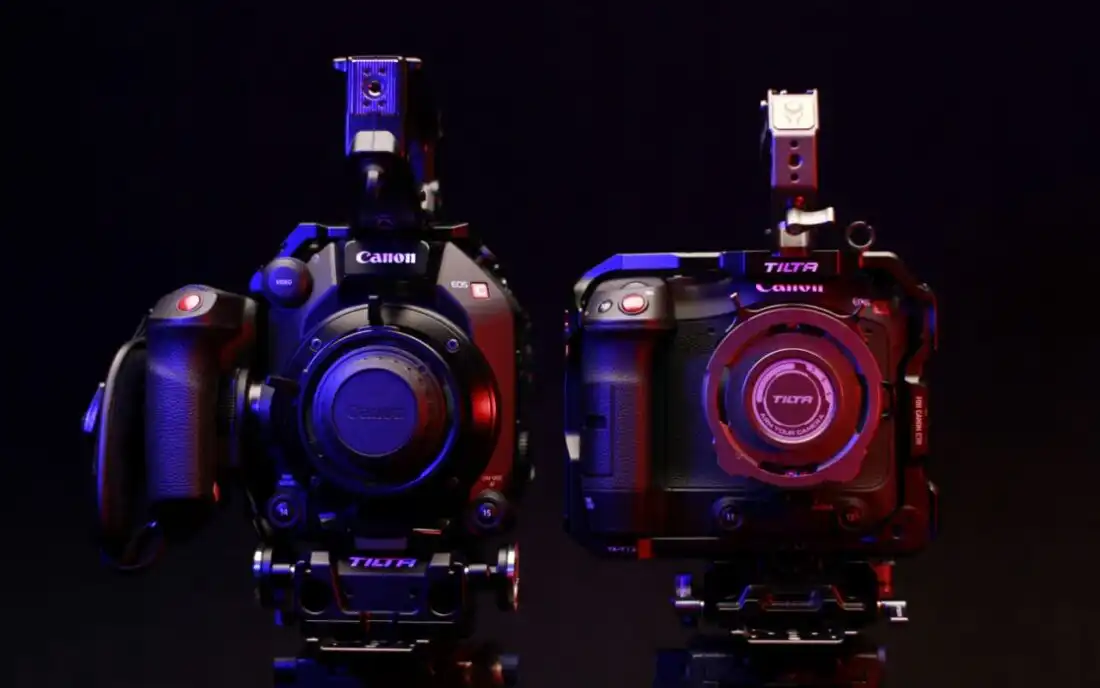
With the Canon Cinema EOS C-Series, Canon has built one of the most confusing, and also most useful, cinema camera lineups in the industry. There’s the C70, the C80, the C300 Mark III and the C500 Mark II. And then there’s the C400, and now newer models are entering the lineup too.
Canon Cinema EOS is Canon’s family of cinema cameras. Several of these models share a sensor type, a frame rate or a recording format, yet each one suits a different kind of production. So which one is actually right for you? Let’s break it down.
Canon C500 Mark II
The C500 Mark II is one of my personal favorites in the Canon Cinema EOS lineup. It uses a full-frame 5.9K sensor with more than 15 stops of dynamic range. It also supports Canon Cinema RAW Light, along with Super 35 and Super 16 crop modes.
Dynamic Range, Cinema RAW Light and Crop Modes
Dynamic range is the span between the brightest and darkest parts of a scene that a camera can capture with detail. It’s measured in stops, and more stops means more room before highlights turn to pure white or shadows fall into black. That matters any time a shot mixes bright and dark areas, such as a sunny window behind someone sitting indoors.
Cinema RAW Light is Canon’s lighter-weight RAW format. RAW holds on to the sensor’s original information, which gives you more room for color work later. The crop modes let the camera record from a smaller area of the sensor that matches the Super 35 or Super 16 format. In practice, one body can also work with lenses made for those smaller formats.
Why the C500 Mark II Is One of My Favorites
The biggest reason I like it? The image. The full-frame sensor gives you a beautiful field of view, and the 5.9K capture gives you plenty of resolution to work with.
Field of view is how much of the scene the camera takes in through a given lens. A full-frame sensor takes in more of it than a smaller sensor does with that same lens. Meanwhile, the extra resolution gives you more image to work with once you’re in the edit.
It’s a very capable camera for commercial, documentary, narrative and corporate production. That kind of range is exactly what makes it so versatile.
Canon C300 Mark III
The C300 Mark III is Super 35, but don’t let that make you think it’s somehow inferior. Its DGO, or Dual Gain Output, sensor is one of the things that makes this camera special. Canon rates it at over 16 stops of dynamic range, and it can record 4K at up to 120p.
How the DGO Sensor Works
Here’s what Dual Gain Output means in plain language. The sensor reads each image at two different gain levels at the same time. One reading favors the bright parts of the frame and the other favors the dark parts, and the camera blends them into a single image.
In practice, that helps you hold on to both ends of the image in a scene with bright sky and deep shade. Meanwhile, 4K at up to 120p gives you smooth slow motion when you play that footage back at a normal speed.
When I Prefer the C300 Mark III
And personally? I actually prefer the C300 Mark III’s image to the C500 Mark II in some situations. The DGO sensor can produce beautiful highlight and shadow detail, and there’s something about the image that just feels really nice.
The downside? It’s Super 35. If you specifically want full-frame and 5.9K capture, the C500 Mark II wins. If you care more about the image and the S35 look, the C300 III is hard to beat.
Canon C70
The C70 is the little powerhouse. It’s Super 35, uses Canon’s DGO sensor, has internal ND, and can record 4K up to 120p. It’s also smaller and more compact than the traditional C300/C500-style bodies.
What Internal ND Means on a Shoot
Internal ND means neutral density filters built right into the camera. An ND filter cuts the amount of light reaching the sensor without changing its color. That lets you keep the exposure settings you want in bright conditions. You can also switch the filters in and out without adding anything to the front of the lens.
Put that together with the smaller body, and you get what I’d call a compact S35 powerhouse. It’s excellent for smaller productions.
Why a Lot of DPs Still Love the C70
And here’s the controversial part: a lot of DPs still love the C70. DPs, or directors of photography, are the people responsible for a production’s look. Even with newer cameras available, there are people who prefer the way the C70 renders an image. Rendering covers the texture, sharpness and overall feel of the picture.
I understand why. It has a slightly softer, more organic feeling compared with some of the newer, extremely sharp cameras. That’s subjective, of course, but image character matters.
Canon C80
The C80 is essentially Canon taking the C70 and pushing it into a newer generation of Canon Cinema EOS cameras. It uses a 6K full-frame stacked CMOS sensor and supports 4K 120p. It also has Canon’s Dual Pixel CMOS AF II, Cinema RAW Light and a 12G-SDI output.
A stacked sensor keeps its circuitry in separate layers, a design aimed at reading each frame off the sensor faster. Dual Pixel CMOS AF II is Canon’s autofocus system, and it works right on the sensor itself.
Why 12G-SDI Is a Big Deal
That SDI connection is a big deal for professional production. SDI stands for Serial Digital Interface, the video connection built for professional video work. It uses a locking connector and carries a signal over long cable runs. The 12G version also has the capacity to move high-resolution video down a single cable.
That connection matters especially when you’re working with monitors, wireless video, live environments or longer cable runs. Monitors and wireless video both depend on a steady feed from the camera, and a locking connector is less likely to come loose mid-shot. In a live environment, there’s no second take if a signal drops. On longer cable runs, SDI holds its signal over distances where other connections struggle.
Full Frame With a Super 35 Option
The C80 also gives you full-frame flexibility while retaining Super 35 crop capability. In practice, you can shoot with the whole full-frame sensor for a wider field of view. When you want to use lenses made for Super 35, you can crop in to that format instead.
So Which Canon Cinema EOS Camera Should You Choose?
Here’s how the four cameras stack up at a glance. Each one earns its place for a different reason.
- C500 Mark II: Full-frame, 5.9K, beautiful image, extremely versatile.
- C300 Mark III: Super 35, DGO sensor, excellent dynamic range, 4K 120p, very “cinema.”
- C70: Compact S35 powerhouse, beautiful image, internal ND, excellent for smaller productions.
- C80: Modern full-frame compact cinema camera with 6K, 4K/120p, SDI and excellent autofocus.
If I’m choosing based purely on what I personally enjoy shooting, it’s the C300 Mark III and the C500 Mark II. The C300 III has an image I really love. The C500 II gives me the full-frame flexibility I often want.
And that’s why there isn’t one “best” Canon. There are just different tools for different productions. The right Canon Cinema EOS camera for you comes down to which of those strengths your production needs most.
The Best Option: Shoot With All of Them
The best option? Shoot with all of them. We have done multi-camera shoots with all these Canon Cinema EOS cameras together.
A multi-camera shoot puts several cameras on the same scene at once, so the edit can cut between angles. That only works smoothly when the footage from each camera looks consistent side by side. These cameras match very well, and they’re very fun to work with.
Let’s Make Something
We use the cameras we rent on real productions, so we can help you figure out what your shoot actually needs, and just as importantly, what it doesn’t. Our camera and equipment rentals are available individually or packaged around your shoot, and we can add experienced camera operators, DPs and ACs when you need people as well as gear. If you want a team to take the project from planning through post, our video production services cover that too.
From shaping the story before you shoot to the final cut, our production services are built around your project, and our work spans documentaries, commercials and branded content. Agape Media Group is a small, owner-led production company based in South Florida, so you work directly with the people responsible for your project. Tell us what you’re shooting, request a quote or call 954-249-0702, and we’ll help you build the right package.