
What Camera Should You Shoot On? A Practical Guide to Choosing a Cinema Camera
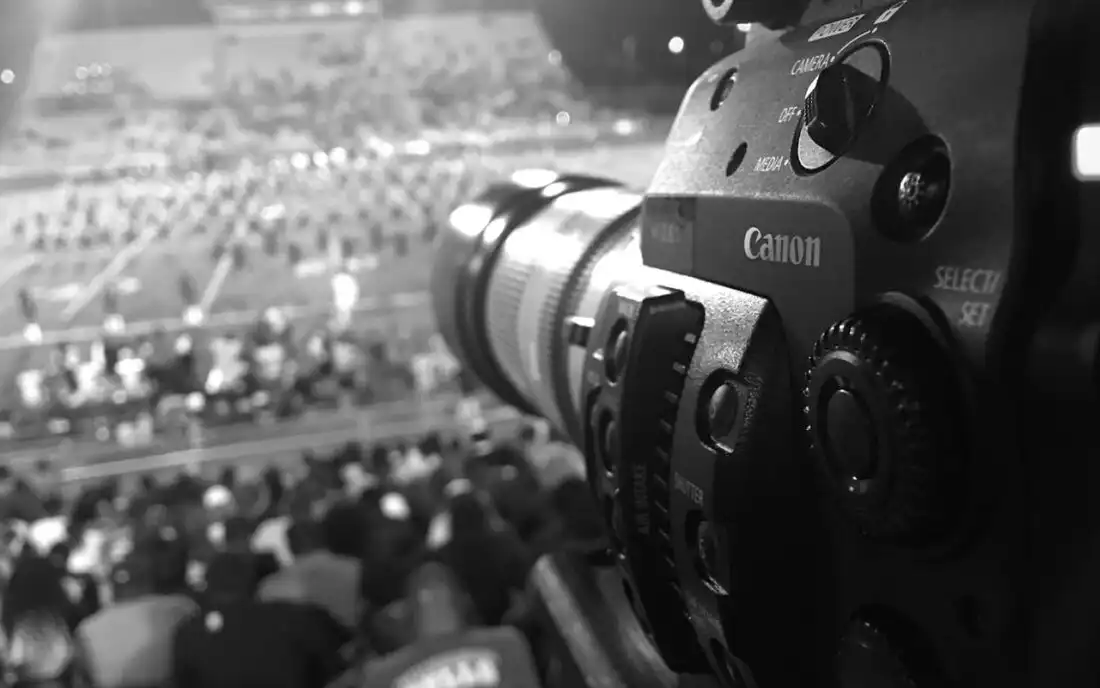
There is a dangerous question that filmmakers ask themselves when choosing a cinema camera: “What camera should I buy?” Once you start researching, you’re about 14 minutes away from watching a 47-minute YouTube video comparing dynamic range charts from cameras you’ve never heard of. And somehow you’re now considering spending $18,000.
The truth is, choosing a camera is usually much simpler than the internet makes it seem. The “best” camera depends almost entirely on what you’re shooting, where it’s going, and how you’re going to shoot it.
Start With the Final Product
Before looking at a single camera specification, ask where this video is going to live. In other words, choosing a cinema camera starts with the final product.
It might be a feature film or a documentary. It could end up on Netflix, YouTube or Instagram. It might live on a corporate website or a giant LED wall. It might also run as a television commercial or a vertical social campaign.
These are very different production requirements. A giant LED wall shows every frame at an enormous size. A vertical social campaign, on the other hand, fills a phone held upright.
If you’re shooting a social media video that people will ultimately watch on a phone, you probably don’t need a $50,000 cinema package. That doesn’t mean you shouldn’t use one. It just means you should understand what you’re paying for.
What a Professional Cinema Camera Gives You
A professional cinema camera gives you much more than resolution. You’re often paying for better codecs, dynamic range, monitoring, audio connectivity and timecode. You’re also paying for reliability, ergonomics, ND filters, lens compatibility and recording options. On top of that, there’s the ability to build the camera into a larger production system.
A codec is the method a camera uses to compress and store video. A better codec holds on to more image information. Timecode stamps your footage with a running time reference, which makes it easier to sync cameras and audio.
ND filters cut the light reaching the sensor without changing its color. That lets you control exposure in bright conditions.
Resolution Isn’t Everything
We see this all the time: “This camera shoots 8K. This one only shoots 4K. So the 8K one must be better.” Not necessarily.
4K is already an extremely capable delivery format. Higher-resolution capture can be useful for reframing, visual effects, stabilization, cropping or finishing at a lower resolution. Each of those uses takes advantage of extra pixels. They give you room to push in on a shot or trim the edges while stabilizing.
But resolution is only one piece of the puzzle when choosing a cinema camera. I’d much rather have a properly exposed, well-lit 4K image with good color information and dynamic range than a poorly lit 8K image. A lot of modern professional cameras are already capable of producing incredibly detailed images.
Two Capable Cameras, Two Directions
For example, our Sony FX6 records DCI 4K and UHD 4K and internally supports 10-bit 4:2:2 recording. It also has 15+ stops of latitude and includes a built-in electronic variable ND filter.
DCI 4K is the cinema version of 4K, and it’s slightly wider than UHD 4K, the version made for TVs. In 10-bit 4:2:2, the 10-bit part means more shades of each color than lower bit depths can record. The 4:2:2 part describes how much color detail each frame holds on to.
Latitude describes how much range you have between highlights and shadows. An electronic variable ND lets you adjust the filter strength smoothly instead of in fixed steps.
The Canon C500 Mark II goes in another direction, with a 5.9K full-frame sensor, internal Cinema RAW Light recording and Canon’s Dual Pixel autofocus system. Cinema RAW Light is Canon’s lighter-weight RAW format, and Dual Pixel autofocus works right on the sensor.
Both are extremely capable cameras. You don’t need to shoot 12K just because you can.
What Are You Actually Filming?
This is probably the biggest factor in choosing a cinema camera. A documentary camera needs to be flexible. You’re dealing with unpredictable subjects, changing environments, limited time and sometimes a camera operator who is doing five jobs at once.
That’s where something like the FX6 makes a lot of sense. It’s relatively compact and has excellent autofocus, strong low-light performance, 4K high-frame-rate capabilities and an electronic variable ND.
Each of those features lines up with documentary work. Autofocus helps when no one else is there to pull focus. Low-light performance helps when you can’t control the light. Meanwhile, the variable ND keeps exposure in check as conditions change around you.
Narrative and Commercial Work
Narrative filmmaking is different. You might care more about lens choices, camera movement, monitoring and focus control. You might also care more about dynamic range, RAW recording, color workflow and how the camera integrates with the rest of the department.
The department is the camera team and everything they bring to set. The camera has to fit into that larger system. A commercial might require something completely different again.
Don’t Forget the Lens When Choosing a Cinema Camera
This is one of the biggest mistakes people make when choosing a cinema camera. They spend $10,000 on the camera and then realize they need another $15,000 worth of lenses and accessories.
The camera is only the center of the system. Beyond lenses, you also need to consider a tripod or other support, batteries and media. Media simply means the cards the camera records to. Then there’s a monitor, a follow focus, a matte box, filters, wireless video, audio and a cage.
A follow focus is a geared control for pulling focus smoothly. A matte box is a hood that blocks stray light and holds filters. A cage is a frame around the camera body with mounting points for everything else. Together, those pieces make up a production package.
A camera sitting naked on a table is not a production package. It’s an expensive paperweight.
So What Camera Should You Actually Use?
For a huge percentage of professional productions today, mid-range cinema cameras are more than capable. That’s one of the things I love about where camera technology is right now. You don’t necessarily need an ARRI or RED to make something that looks incredible.
A properly operated Sony FX6, Canon C500 Mark II, Sony FX9, Canon C80 or similar professional cinema camera can produce beautiful images. That goes for documentaries, commercials, corporate work, branded content, interviews, narrative projects and web delivery.
The difference between a $7,000 to $15,000 camera and a $50,000+ camera isn’t always going to be visible to the average person watching your finished video. Some would argue that the quality of the lens you choose is a much more important factor.
Sometimes the expensive camera is absolutely justified. Sometimes you’re just paying for capabilities you aren’t going to use.
The Best Camera Is the One That Fits the Production
My advice on choosing a cinema camera? Don’t start with “What’s the best camera?” Start with “What does this production actually need?” Then work backward.
How That Plays Out on Different Shoots
If you’re shooting a documentary in the Everglades, I’d prioritize mobility, autofocus, low-light capability, ND filtration, battery life and reliability. You’re carrying the gear, following subjects you can’t direct and working in light you can’t control. You may also be far from anywhere to recharge or replace gear, so battery life and reliability matter.
If you’re shooting a controlled narrative scene, I’d put much more emphasis on the lens package, camera movement, lighting and monitoring workflow. A controlled scene gives you the chance to shape every shot, and those are the tools that shape it.
If you’re shooting an interview for a corporate client, I’d probably spend more time worrying about lighting and audio than whether the camera says 6K or 8K on the side. An interview lives on how the person on camera looks and sounds. Extra resolution won’t fix bad light or muddy audio.
The Right Tool for the Project
The goal isn’t to own the most expensive camera. The goal is to use the right tool to make the project better.
That’s also why renting can be such a powerful option. You don’t have to marry one camera system. You can use the FX6 on Monday, a C500 Mark II on Tuesday and something completely different when the project calls for it.
Marrying a camera system means buying one camera and building all your lenses and accessories around it. Renting makes choosing a cinema camera a fresh decision for every project. And honestly, that’s a pretty fun way to work.
Let’s Make Something
If you’re weighing cameras for an upcoming shoot, we’re happy to talk it through. We know the equipment we rent because we actually use it, and our camera and equipment rentals are prepped and ready to go before every rental. Need an operator or an assistant with the camera? We can provide experienced production crew, or handle the whole job through our video production team.
Whether your project needs creative development before the cameras roll or a single piece of gear on shoot day, our production services are built around your project, and our portfolio covers documentary, commercial and branded work. As a small, owner-led production company, we give you one point of contact from start to finish. Tell us about your shoot, get a quote or call 954-249-0702.