
Drone Filming in South Florida: What You Need to Know
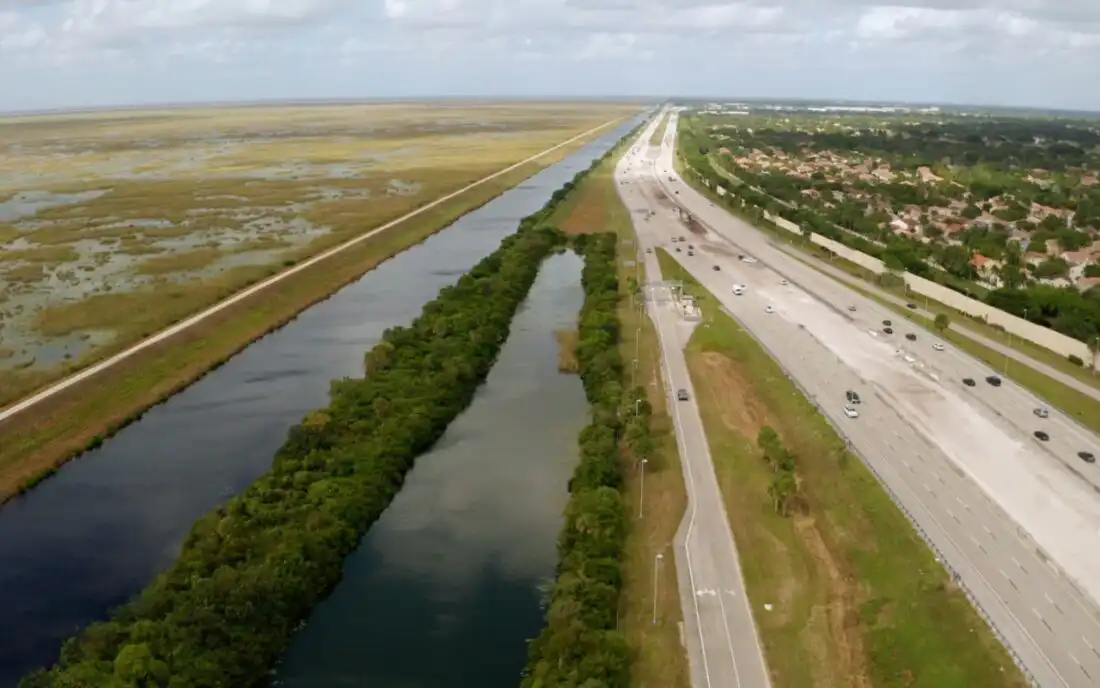
South Florida looks incredible from the air, with beaches, boats, skyscrapers, canals, highways, wetlands, neighborhoods and marinas. When it comes to drone filming in South Florida, it’s basically a drone operator’s playground.
Unfortunately, South Florida is also a drone operator’s minefield. Think airports, controlled airspace, stadiums, temporary flight restrictions, sensitive locations, crowded areas and municipal rules. So before you launch a $2,000 drone into the sky because the sunset looks amazing, let’s talk.
The first rule of drone filming in South Florida: check the airspace
South Florida has a lot of airports: Miami International, Fort Lauderdale-Hollywood International and Palm Beach International, plus executive airports, smaller airports and helicopter facilities. And controlled airspace is everywhere.
In plain terms, controlled airspace is airspace where air traffic control provides service to aircraft. When it’s everywhere, you can’t treat any shoot location as clear by default.
The FAA requires authorization for drone operations in controlled airspace, and LAANC can provide automated authorization for eligible operations below published UAS Facility Map altitudes. That’s a lot of acronyms, so here’s what it means on a real shoot.
If your location is in controlled airspace, you need authorization before you fly. LAANC is a way to get that authorization automatically, as long as the operation is eligible and stays below the altitudes published on the UAS Facility Maps. UAS stands for unmanned aircraft systems, which is the FAA’s term for drones.
Don’t guess. Check your airspace before the shoot, not after you’ve set up and the light is perfect.
A “no-fly zone” isn’t always as simple as it sounds
You will hear people say things like, “That’s a no-fly zone.” But aviation restrictions aren’t always binary, which means the answer isn’t always a simple yes or no.
Some locations have controlled airspace with specific altitude limits. So with the right authorization, you may be able to fly there, but only up to a certain height.
Others may have temporary flight restrictions. A temporary flight restriction is what it sounds like: a restriction on flying in a defined area that isn’t permanent. So a spot that was fine last month may not be fine on shoot day.
Some restrictions relate to specific facilities or events, and some areas may allow flight with authorization. In other words, a “no” can sometimes turn into a “yes” once you have the right approval.
And some locations may have additional local restrictions even when FAA airspace rules allow the flight. So clearing the airspace question doesn’t automatically settle everything else. The FAA’s B4UFLY resources and DroneZone are good starting points for checking where and how you can legally operate.
Airports are a big deal
Don’t fly near an airport casually. Not even if your drone is tiny, not even if you’re only going up 50 feet, and not even if “it’s just for a quick shot.”
Each of those excuses can sound reasonable in the moment. None of them changes who has priority in the sky.
Manned aircraft always have priority, and drone operators are responsible for avoiding aircraft and for not creating hazards. “Manned” simply means there are people on board. So avoiding those aircraft is on the person flying the drone.
For controlled airspace, authorization may be required before operating. For drone filming in South Florida, this matters even more, because the region’s dense aviation environment puts so many airports and helicopter facilities in the mix.
Commercial filming is different from recreational flying
If you’re shooting for a client, production company, business or other commercial purpose, you need to make sure you’re operating under the appropriate FAA rules. Recreational flying is flying purely for fun. Once the footage is for a client or a business, you’re in different territory.
For many commercial drone operations, that means operating under Part 107 with a properly certified remote pilot. Part 107 is the name of that set of FAA rules. There may also be additional requirements depending on the operation.
And having a Part 107 certificate does not automatically give you permission to fly anywhere. It simply means you’ve met the requirements to operate under that regulatory framework.
Think of the certificate as a qualification, not a permission slip. You still have to check the airspace for every location, and you may still need permission for the spot you’re filming from.
Then there are local permits
Here’s where things get confusing. The FAA controls the airspace, but local governments can regulate the use of their property and the activities taking place on their property.
So even if the FAA says you can legally fly somewhere, you may still need permission to film from a particular park, beach, government property or other location. That’s why you should treat drone filming in South Florida as both an aviation question and a production question.
The aviation question is whether you can legally make the flight. The production question is whether you can set up and film from that spot on the ground.
Flying over people
This is another area where you shouldn’t make assumptions. The FAA has specific rules governing operations over people and moving vehicles, with different requirements depending on the operation and aircraft.
Don’t simply assume, “It’s a small drone, so it’s fine.” The size of the drone doesn’t magically eliminate aviation regulations.
Keep that in mind around beaches, highways and crowded areas, which South Florida has plenty of. Whether you can fly over the people and traffic there comes down to the rules, not a guess based on the drone’s size.
Wind, heat and water
Even when everything is legal, drone filming in South Florida comes with some practical challenges. Being legal doesn’t make the conditions any easier.
Wind can be stronger than it looks. A breeze that seems mild from the ground can still be a real problem for a drone.
Heat affects batteries, and the batteries are what keep the drone in the air. Saltwater is obviously not friendly to electronics, and a drone is basically a flying set of electronics.
And flying over the ocean gives you a very limited recovery plan if something goes wrong. Over open water, there’s no patch of ground to bring the drone down on.
That means batteries should be healthy, you should check the weather, and your pilot should know the aircraft’s limitations. Knowing those limitations means understanding what the drone can handle before the conditions put it to the test.
Plan the shot before you arrive
A good drone shot isn’t, “Let’s fly around and see what looks cool.” Well, sometimes it is. But professional production should be more deliberate, which means answering a few questions before the drone ever leaves the ground.
Launch, landing and airspace
Start with where you are launching and where you are landing. You want both decided before the drone goes up, not figured out mid-flight.
Then confirm what airspace you’re in, the maximum permitted altitude and any nearby airports. Those answers come straight from the airspace check, so there’s no reason to guess on the day.
Weather, people and the flight path
Next, check the weather conditions and the wind. Wind deserves its own check, because it can be stronger than it looks.
Know where the nearby people and vehicles are, too. That connects directly to the rules on flying over people and moving vehicles.
Finally, know where the drone will travel and what the camera needs to capture. Knowing the shot you need keeps the flight focused, instead of flying around to see what looks cool.
And have a backup plan. Because in Florida, there’s always a chance a thunderstorm decides it wants to be the director.
The good news about drone filming in South Florida
When everything is planned properly, South Florida is an incredible place for aerial cinematography. And because drones have become so capable, you don’t necessarily need a huge cinema aircraft to get beautiful footage.
A huge cinema aircraft is a large drone built to carry a cinema camera. Depending on the shot, a smaller drone may be all you need.
But the responsibility hasn’t gotten smaller just because the drones have. You still have to think about the airspace, the airports, the people below and the local permits, no matter how small the aircraft is.
The best drone operator isn’t the person who gets the coolest shot. It’s the person who gets the shot safely, legally and without becoming tomorrow’s aviation headline.
Let’s Make Something
Planning a shoot in South Florida? We’re based here and serve productions throughout Broward, Miami-Dade and Palm Beach counties. Our production crew includes camera operators, DPs, ACs, gaffers, grips, sound professionals and drone operators, and our camera and equipment rentals can be delivered to your location. When you want one team handling the project from planning through post, our video production services cover every stage.
Not every project starts with a finished script, and our creative development support can help shape the story before the cameras roll. All of our production services are built around your project, and our portfolio covers documentary, commercial and branded work. As a small, owner-led production company, we keep communication direct. Tell us about your project, get a quote or call 954-249-0702.