
Sony FX5: Is the New Camera Actually Worth It?
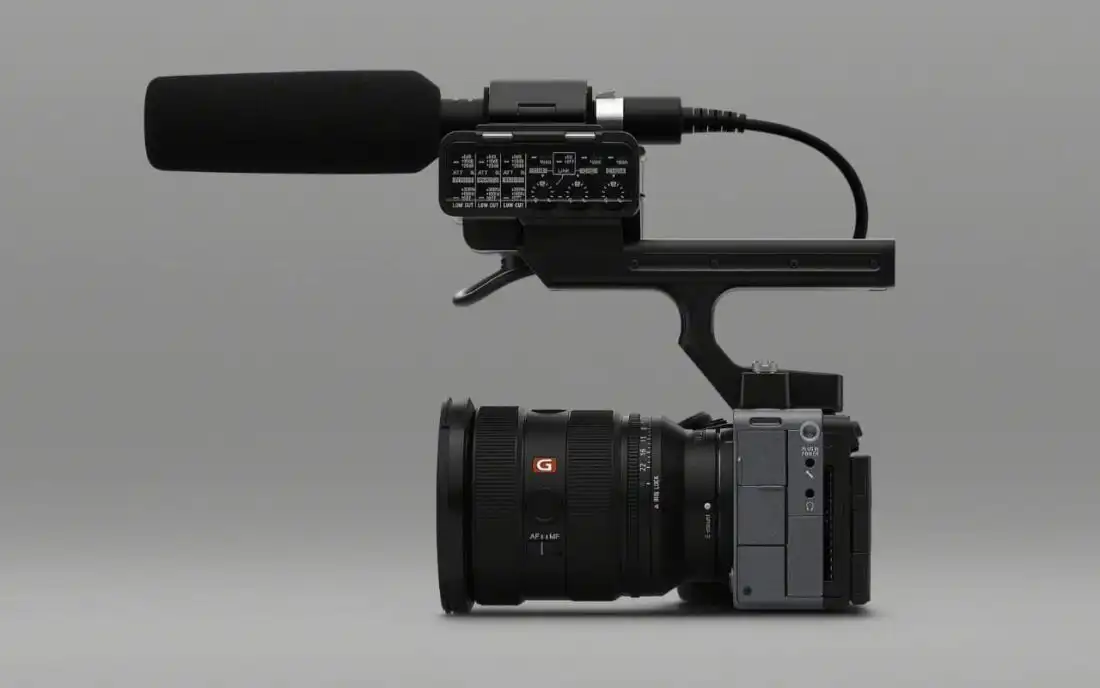
Sony just dropped a camera that is going to make a lot of FX3 owners uncomfortable. Meet the Sony FX5. And yes, it is impressive.
But is it revolutionary? That’s a different question. Answering it means separating what Sony actually changed from the numbers that simply look good on a specification sheet.
What Sony Actually Changed
The Sony FX5 is a full-frame camera in Sony’s Cinema Line, the family of cameras Sony builds for filmmaking. It has a 5K Open Gate mode, internal 16-bit X-OCN compressed RAW, three base ISO settings, AI-assisted subject recognition and Fast Hybrid AF. That’s a ridiculous amount of technology in a very small body.
Three Base ISOs for Low-Light Shooting
The three base ISO settings are 800, 4000 and 12,800 for the relevant shooting modes. That gives Sony a very interesting approach to low-light shooting.
A base ISO is a native sensitivity setting, the point where the sensor performs at its best. Having three of them gives the camera more than one clean starting point as the light changes. So when a location gets darker, you can switch to a higher base setting instead of pushing a lower one past its best range.
Internal X-OCN RAW With No External Recorder
And then there’s the big one: internal X-OCN. You no longer need an external recorder to capture RAW.
RAW footage keeps far more of the information the sensor captures than a standard video file does. That keeps choices like white balance and exposure much more flexible later, when you’re color grading. X-OCN is Sony’s compressed RAW format, designed to hold on to that flexibility while making the files more manageable.
The 16-bit part refers to bit depth, which describes how many fine steps of tone and color the file can record. Higher bit depth means smoother gradients and more room to adjust the image before it starts to fall apart.
Without internal RAW, you’d need an external recorder to capture it. That recorder is another device to mount, power and cable to the camera, and it comes with its own media to manage. So building RAW into the body is a genuinely useful upgrade for those users who need to shoot RAW.
Open Gate Is Actually Exciting
The Sony FX5 offers full-frame 5K 3:2 Open Gate recording. Open Gate means the camera records the entire sensor, top to bottom and side to side, instead of cropping it to a widescreen shape. A 3:2 frame is taller for its width than a 16:9 frame, so you keep extra picture above and below.
That’s useful for productions that need to deliver multiple aspect ratios. An aspect ratio is simply the shape of the frame, and some productions need several different shapes from the same footage.
Want a traditional 16:9 master? Great.
Need vertical social content? You have more sensor area to work with. That extra height means a tall vertical crop keeps more of the picture than it would from a standard widescreen recording.
Open Gate and Anamorphic Lenses
But beyond that, everyone wants to shoot anamorphic these days, as more affordable anamorphic lenses are filling the market. Open Gate is generally the best way to accomplish that.
An anamorphic lens squeezes a wider view sideways onto the sensor, and you stretch that image back out in post. The stretch only happens side to side. So the extra height from recording the full sensor gives the finished image more room top to bottom. That generally means more of the sensor ends up in your final wide frame.
The AI Stuff: Useful or Gimmick?
Sony has leaned heavily into AI-assisted subject recognition and processing. Some of it is useful.
Subject recognition is the camera identifying what’s in the frame, so the autofocus knows what it should follow. Better subject recognition can make autofocus more reliable, because the camera is less likely to drift off your subject and grab something else. Fast Hybrid AF is Sony’s name for the autofocus system doing that work.
Sony also uses AI processing to improve its Auto Tracing White Balance functionality. White balance is how the camera keeps whites looking white under different kinds of light. Auto tracing means it keeps adjusting that setting on its own as the light changes. I don’t care as much about these features currently, but I’m sure someone does.
The 240fps Headline Needs an Asterisk
This is important. Sony advertises 4K up to 240fps and 5K Open Gate up to 120fps. However, Sony plans to deliver some of those high-frame-rate capabilities through future firmware updates. They aren’t necessarily available immediately at launch.
Frame rate is the number of individual images the camera captures each second, and fps stands for frames per second. When you shoot at a high frame rate and play it back at a normal speed, you get smooth slow motion. Firmware is the software that runs inside the camera, and an update can add features after the camera is already on the market.
So don’t buy the camera today solely because a specification sheet says “240fps.” Check the firmware version and what is actually available. If your shoot depends on a specific high-frame-rate mode, confirm it works on the firmware in the exact camera you’ll be using.
What Feels Like Hype?
The headline numbers are impressive: 5K Open Gate, 240fps, 16-bit RAW, AI and three base ISOs. But none of those things automatically make your footage better.
A camera doesn’t fix bad lighting, bad composition, bad focus, bad audio or bad storytelling. Those come down to the decisions people make on set and in the edit. A higher resolution won’t save a poorly lit scene, and a higher frame rate won’t rescue a story that isn’t working.
What Actually Excites Me About the Sony FX5
Internal RAW
Internal RAW is very useful. It gives you the flexibility of RAW in the grade without adding a recorder, extra cables and extra media to the camera. For anyone who needs to shoot RAW, that keeps the whole setup simpler.
Open Gate for Anamorphic
Open Gate is huge for anamorphic shooting. With more affordable anamorphic lenses filling the market, recording the full sensor is generally the best way to shoot with them.
Three Base ISOs for Documentary and Low Light
The three base ISOs are potentially extremely useful for documentary and low-light work. Documentary shoots often happen in whatever light is already there, and you can’t always stop to add more. Having more native settings to work from gives you more options when the light isn’t on your side.
A Tiny Body Without a Giant Rig
The small body is the part that could make the Sony FX5 genuinely disruptive. If you can get serious cinema-camera recording capabilities in a tiny body without building a giant rig, that’s valuable.
A rig is everything you build around a camera to get it ready for production, such as handles, monitors, power and recorders. Every piece adds size, weight and setup time. When the camera body already records at this level, the whole package can stay small. That makes it faster to move and easier to carry through a long day.
Would I Buy a Sony FX5?
Maybe. I actually think it’s a fantastic camera.
The question for us isn’t “Is the FX5 cool?” Yes, it is. The question is “Will our clients actually need it?”
If the Sony FX5 becomes popular and productions start asking for it, we’ll absolutely take another look. That’s one of the advantages of a rental company: we don’t need to buy every new camera the moment it launches.
Why the Newest Camera Isn’t Always the Best Rental Camera
Instead, we can watch the market and see what professionals actually use. Then we add equipment when there is real demand. That way, what productions ask for drives the decision, not a launch date or a spec sheet.
That’s because the newest camera isn’t always the best rental camera. The best rental camera is the one productions actually want to rent.
Let’s Make Something
We use the cameras we rent on real productions, so we can help you figure out what your shoot actually needs, and just as importantly, what it doesn’t. Our camera and equipment rentals are available individually or packaged around your shoot, and we can add experienced camera operators, DPs and ACs when you need people as well as gear. If you want a team to take the project from planning through post, our video production services cover that too.
From shaping the story before you shoot to the final cut, our production services are built around your project, and our work spans documentaries, commercials and branded content. Agape Media Group is a small, owner-led production company based in South Florida, so you work directly with the people responsible for your project. Tell us what you’re shooting, request a quote or call 954-249-0702, and we’ll help you build the right package.